
WELCOME BONUS 300%
UP TO €2000 + 100
FREE SPINS
UP TO €2000 + 100
FREE SPINS
Home → Blackjack
Blackjack at Slotexo Casino: Variants, Rules and Payouts
Set session stop after 30 percent loss
Slotexo Casino offers a 300% welcome bonus up to €2,000 plus 100 free spins, which significantly increases the initial bankroll for players seeking extended playtime on table games. The high bonus amount allows users to absorb variance better during long sessions, provided they adhere to strict deposit limits and wagering requirements set by the operator. This financial cushion is essential for managing risk when engaging with high-volatility slots or progressive jackpot games that dominate the platform's offering.
Tischspiele contribute only 10% toward the wagering requirement of the welcome bonus, making them less efficient for clearing funds compared to slots which count at 100%. Players should calculate their expected loss based on the house edge of specific blackjack variants before deciding to stop, as slow progress on tables can deplete funds faster than anticipated. Setting a hard limit prevents emotional chasing of losses when the bonus conversion rate proves too costly relative to the game's return to player percentage.
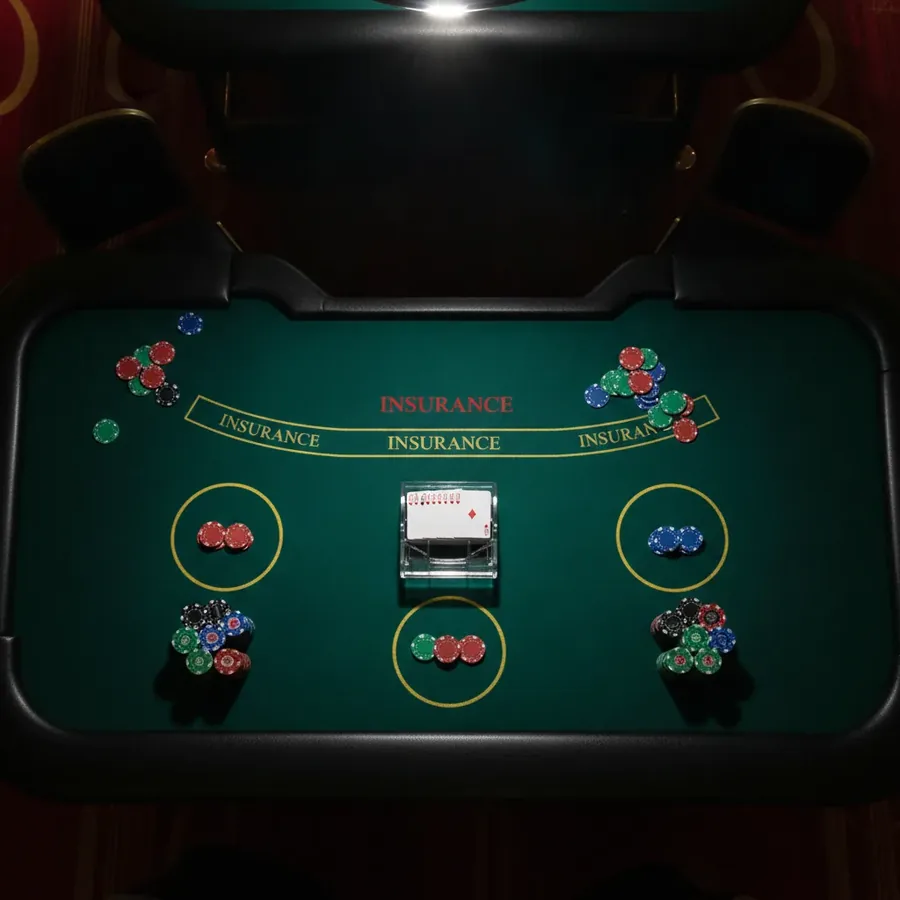
The Blackjack Insurance side bet carries a steep house edge of 7.47%, which rapidly erodes any advantage gained from the initial deposit match or free spin winnings. Accepting insurance when the dealer shows an ace is statistically unfavorable unless counting cards with a true count of +3 or higher, a skill rarely applicable in live settings. Ignoring this poor value bet preserves capital, ensuring that the 30% loss threshold is reached through standard play rather than costly side wagers that drain the balance unnecessarily.
Surrender vs Playing Out on 16 vs 10
Blackjack Surrender allows players to forfeit half their bet after the dealer checks for blackjack, reducing the house edge by approximately 0.08 percentage points in favorable rule sets. This strategic move is crucial when holding a hard 16 against a dealer's 10, as playing out typically results in a higher expected loss over thousands of hands. Utilizing late surrender effectively mitigates risk, turning a potential total loss into a manageable partial deficit that keeps the bankroll intact for future betting opportunities.
In contrast, the standard Blackjack 6 Decks variant with S17 and DAS offers a much lower house edge of 0.46% when basic strategy is followed perfectly without surrender options. Players must decide whether the specific table rules include surrender, as its absence forces them to hit or stand on weak hands like 16 versus 10 regardless of the odds. Understanding these rule differences is vital, as the availability of surrender can significantly alter the long-term profitability of a session compared to non-surrender games.
Early surrender is significantly more valuable than late surrender, improving RTP by up to 0.6 percentage points, but it is extremely rare in modern online casino environments. Most platforms, including those analyzed here, default to late surrender where the dealer must first check for blackjack before allowing the player to concede. Consequently, players relying on surrender as a primary defense mechanism may find fewer suitable tables, forcing them to adapt their strategy to the more restrictive late surrender condition available.
Six Card Charlie Pays Immediately with Six Cards
Some specialized blackjack variants award a Six Card Charlie if the player draws six cards without busting, paying out immediately regardless of the dealer's final hand total. This rule acts as a powerful modifier that reduces the house edge, though it is not present in the standard Blackjack 6 Decks or Live Infinite Blackjack tables offered by Slotexo. Players should verify the specific rules of each game variant before playing, as the presence of this feature can drastically change the optimal strategy and expected return per hand.
The Infinite Blackjack table by Evolution features an RTP of 99.47% and allows unlimited seats, creating a dynamic environment where side bets like Any Pair or 21+3 can influence overall returns. Managing bankroll across multiple hands requires recognizing how these unique rules impact the frequency of wins and the volatility of the session outcomes.
Lightning Blackjack introduces multipliers up to 25x on winning hands, adding an element of excitement that complements standard rules but does not include the Six Card Charlie feature. The RTP for this variant stands at 99.56%, indicating a slightly better theoretical return than the infinite version, yet the random multiplier application creates high variance in short sessions. Players seeking consistent payouts from special hands like Six Card Charlie should look for niche variants rather than relying on mainstream live dealer titles that focus on multiplier mechanics instead.
How long do 100 EUR last at a 1 EUR table?
At a 1 EUR minimum bet table, a 100 EUR bankroll allows for exactly 100 hands if no wins occur, providing a baseline for calculating expected duration based on the game's house edge. For the standard Blackjack 6 Decks variant with a 0.46% house edge, players can expect to lose approximately 0.46 EUR per hundred hands, theoretically extending play significantly beyond the raw bet count. This low edge makes it one of the most efficient ways to consume a small bankroll while meeting wagering requirements for bonuses that favor table game contributions.
Live tables such as Blackjack Party by Evolution accept bets ranging from 1.00 to 1.000 EUR, allowing players to start with the minimum 1 EUR stake to stretch their 100 EUR fund. The party atmosphere with two moderators adds entertainment value, but the underlying mathematics remain governed by the same house edge principles as standard digital blackjack games. Players should monitor their hand count closely, as even minor deviations from basic strategy can increase the effective house edge and shorten the lifespan of their initial deposit.
Comparatively, the single-deck classic blackjack variant boasts an impressive RTP of 99.85%, meaning the house edge is just 0.15%, which would allow a 100 EUR bankroll to last substantially longer than at other tables. However, many single-deck games compensate for this advantage by offering lower payouts, such as 6:5 instead of 3:2, which increases the house edge to 1.85% and drains funds four times faster. Always check the payout structure alongside the deck count to accurately estimate how long a fixed budget will sustain play at a given table.
Why Loss Progression Quickly Reaches Table Limit
A betting progression system that doubles stakes after each loss quickly escalates the required bankroll, causing players to hit the maximum table limit far sooner than flat-betting strategies. At Blackjack Party, where the maximum bet is capped at 1.000 EUR, a sequence of ten consecutive losses starting from 1 EUR would require a 1.023 EUR bet on the eleventh hand, exceeding the limit. This cap prevents recovery through increased wagering, trapping players with a large net loss that cannot be mitigated by simply raising the next stake size.
The Lightning Blackjack table also imposes a 2.500 EUR maximum bet limit, which restricts aggressive progression systems even further due to the higher starting thresholds often associated with live dealer games. With an RTP of 99.56%, the statistical expectation remains positive for the player in the long run, but short-term variance combined with betting limits can lead to rapid depletion of funds. Players relying on martingale-style strategies will find these ceilings prohibitive, as the exponential growth of bets outpaces both typical bankrolls and the table's upper bounds.
Infinite Blackjack offers a higher maximum bet of 5.000 EUR, providing more room for progression systems but still posing a significant risk when facing losing streaks. The presence of four side bets (Any Pair, 21+3, Hot 3, Bust It) adds complexity, as increasing bets on these high-house-edge options can accelerate losses independently of the main game. Combining a progression system with volatile side bets creates a compounding effect that drains the 100 EUR starting bankroll rapidly, making disciplined staking essential to avoid hitting the limit prematurely.
Blackjack variants at a glance
| Variant | Payout | House edge | Rule | Bet range |
|---|---|---|---|---|
| Blackjack Split / Double / H17 – Regel-Effekte | n.a. (Regel-Modifikatoren) | H17 +0.22 Prozentpunkte; RSA −0.08 Prozentpunkte; DAS −0.14 Prozentpunkte | Dealer Hits Soft 17 verschlechtert RTP um 0.22 Prozentpunkte; Resplit Aces verbessert um 0.08 Prozentpunkte; Double After Split verbessert um ca. 0.14 Prozentpunkte; 6 Decks statt 8 – ca. 0.02 Prozentpunkte. | Double – Einsatz ×2 mit einer Karte; Split – bis 4 Hände; Ass-Split meist mit einer Karte. |
| Blackjack Auszahlung 6:5 statt 3:2 (6 Decks) | 98.15% | 1.85% | Ersatz von 3:2 durch 6:5 fügt exakt +1.39 Prozentpunkte zum Vorteil des Casinos hinzu – stärker als jede andere Regeländerung. Bei $10 Einsatz zahlt Blackjack $12 statt $15. | Blackjack 6:5, Gewinn 1:1 |
| Blackjack Ein Deck, klassische Regeln, 3:2 | 99.85% | 0.15% | Weniger Decks = niedrigerer Vorteil; ein Deck gibt ca. −0.48 Prozentpunkte gegenüber 8 Decks. Oft durch 6:5 Auszahlung kompensiert. | Blackjack 3:2, Gewinn 1:1 |
| Blackjack Insurance / Versicherung (6–8 Decks) | 92.53% | 7.47% | Separate Nebenwette bis 50% der Hauptwette, wenn der Dealer ein Ass hat. Basisstrategie schreibt IMMER Ablehnung vor (außer Karten zählen bei True Count ≥ +3). Bei einem Deck Vorteil ≈ 5.88% | Insurance 2:1 |
| Blackjack Liberal Vegas Strip (liberale Regeln, 3:2) | 99.72% | 0.28% | Günstigste Regelkombination: S17 + DAS + Resplit + Late Surrender. Standardabweichung 1,15 | Blackjack 3:2, Gewinn 1:1 |
| Blackjack 6 Decks, S17, DAS, DOA, Auszahlung 3:2, Basisstrategie | 99.54% | 0.46% | Dealer steht auf Soft 17; Verdopplung auf jeder Zweierkarte; Verdopplung nach Split erlaubt; keine Aufgabe. Basisstrategie ist für diesen Wert zwingend | Blackjack 3:2, normaler Gewinn 1:1, Insurance 2:1 |
When does the table max bet apply?
The blackjack variants at Slotexo Casino operate with specific betting limits that interact directly with bonus wagering conditions. The Infinite Blackjack table allows stakes ranging from 1 to 5,000 EUR, while Lightning Blackjack caps at 2,500 EUR per hand. These upper limits define the maximum single wager a player can place during active bonus play.
Table games contribute only 10% toward the 300% welcome bonus turnover requirement, making high-stakes bets inefficient for clearing funds. A 10 EUR wager on Infinite Blackjack counts as just 1 EUR of progress, requiring significantly higher volume than slot deposits. This low contribution rate forces players to manage their bankroll more conservatively to meet the full turnover threshold.
Stand-on-17 Rule and Its Meaning for Players
The Liberal Vegas Strip variant features a dealer standing on Soft 17 (S17), which reduces the house edge to 0.28%. In contrast, variants where the dealer hits Soft 17 increase the house edge by an additional 0.22 percentage points. This rule change significantly impacts the long-term return to player across thousands of hands.
S17 rules appear in games offering a 99.72% RTP, providing better odds than tables with H17 restrictions. The 6-deck version with S17, DAS, and DOA maintains a 0.46% house edge when basic strategy is applied correctly. Players relying on strict mathematical play benefit most from these favorable standing conditions.
Which hands are excluded from Surrender?
Late Surrender allows players to forfeit half their bet after the dealer checks for blackjack, improving RTP by 0.08 percentage points. Early Surrender, which permits this action before the dealer check, offers up to a 0.6 percentage point advantage but is extremely rare. Most available tables restrict surrender options to standard late surrender scenarios only.
Insurance vs Even Money on Own Blackjack
Insurance bets pay 2:1 if the dealer has a ten-value hole card, costing the player an extra half-bet upfront. The house edge for insurance stands at 7.47%, drastically lowering the overall RTP to 92.53% for that side wager. Basic strategy dictates always rejecting insurance unless counting cards reveal a true count of +3 or higher.
Double Down after Split: which tables allow it
Double After Split (DAS) permits players to double their stake on newly split hands, reducing the house edge by approximately 0.14 percentage points. This rule is available in the Liberal Vegas Strip variant and contributes to its superior 99.72% RTP figure. Tables lacking DAS force players to accept a higher inherent disadvantage on split pairs.
Even Money only possible with Dealer Ace
The insurance side bet on Blackjack Insurance pays 2:1 when the dealer shows an Ace, creating a separate wager up to 50% of the main stake. This option carries a house edge of 7.47% for standard 6–8 deck games, making it mathematically unfavorable compared to the main game's near 99.54% RTP. Players should generally decline this offer as basic strategy dictates rejection unless counting cards reaches a true count of +3 or higher. A single-deck variant reduces this disadvantage slightly to approximately 5.88%, yet still remains a negative expectation play.
Insurance functions as a hedge against the dealer holding a ten-value card, but the payout structure does not offset the frequency of losing hands over time. The 2:1 ratio applies strictly to the insurance amount, which is distinct from the primary blackjack payout of 3:2 or 1:1 for regular wins. Since the base game offers superior return metrics, allocating funds here erodes the bankroll faster than sticking to optimal main-hand decisions. This specific rule interaction highlights why avoiding side bets preserves capital during extended sessions.
The term "even money" allows players to secure immediate profit if they hold a natural blackjack and the dealer reveals an Ace. Accepting this guarantees a 1:1 win immediately, effectively locking in the same value as taking insurance on a winning hand. While convenient for risk-averse gamblers, it statistically matches the expected value of declining even money while simultaneously forfeiting the potential for a larger 3:2 payout. This choice eliminates variance but caps upside opportunities on high-frequency winning combinations.
Shoe, Cut Card, and 75 Percent Penetration
Blackjack variants like Infinite Blackjack utilize continuous shuffling or specific penetration depths that affect card counting viability and shuffle frequency. The game Infinite Blackjack by Evolution features an RTP of 99.47% and supports unlimited seats at tables with stakes ranging from 1 to 5,000 EUR. Unlike traditional shoe games, these live formats often alter penetration metrics to prevent advantage play, ensuring the house edge remains stable across all rounds. Players must adapt their betting strategies to account for these structural differences in deck management.
Penetration depth determines how many cards are dealt before a reshuffle occurs, directly impacting the effectiveness of advanced techniques like card counting. Standard multi-deck games typically employ a cut card placed at 75% penetration, meaning roughly one-fourth of the deck remains undealt during each cycle. This threshold balances operational efficiency with fairness, though it limits the window where favorable counts can be exploited by skilled participants. Lower penetration rates further restrict player advantages by increasing shuffle frequency significantly.
Live dealer tables such as Lightning Blackjack operate with an RTP of 99.56% and stakes between 1 and 2,500 EUR, offering multipliers up to 25x on winning hands. These digital implementations replace physical shoes with algorithmic distribution, removing manual handling variables entirely. The absence of a physical cut card means penetration is defined by software parameters rather than mechanical constraints, altering the rhythm of play. Understanding these technical distinctions helps players manage expectations regarding game flow and strategic depth.
Bust at 22: Stake Lost Immediately
Standard Blackjack rules dictate that any hand exceeding 21 points results in an immediate loss of the entire stake, regardless of subsequent draws. This hard limit ensures that busting hands never recover value, contrasting sharply with games allowing partial refunds or push conditions on specific totals. For example, a hand totaling 20 has no chance to improve without risking an instant forfeiture if the next card pushes it over 21. This mechanic enforces strict discipline in hitting and standing decisions throughout every round.
Variants featuring unique bust conditions, such as a bust at 22, fundamentally alter the risk profile compared to classic 21-point ceilings. While most platforms adhere to the conventional 21 limit, some specialized tables might introduce alternative thresholds that penalize moderate overages differently. Deviations from this norm require careful verification of specific table terms before placing wagers.
The consequence of busting extends beyond the current hand, influencing overall volatility and long-term return percentages across different betting sizes. A single busted hand at 22 or higher wipes out the committed amount, emphasizing the importance of bankroll management during losing streaks. Players utilizing systems like Martingale face amplified risks due to these irreversible losses, which compound quickly without recovery mechanisms. Recognizing this immediate financial impact aids in setting realistic session limits and withdrawal goals.
Unlimited seats via a split dealer hand
Infinite Blackjack by Evolution accommodates unlimited participants at the virtual table by splitting the dealer's hand into multiple independent streams. This innovation allows thousands of players to engage simultaneously without waiting for individual turns, maintaining a rapid pace suitable for high-volume betting. Stakes range from 1 to 5,000 EUR, catering to both casual players and high rollers seeking substantial action within a single session. The architecture relies on digital replication rather than physical seat allocation.
The split dealer mechanism ensures that each player interacts with their own version of the dealer's cards, eliminating contention for shared resources. This setup supports four distinct side bets including Any Pair, 21+3, Hot 3, and Bust It, enhancing engagement through additional winning opportunities. With an RTP of 99.47%, the game maintains competitive returns despite the complex underlying distribution logic. Players benefit from reduced downtime while accessing diverse betting options concurrently.
Traditional live tables restrict participation based on physical chair availability, whereas digital expansions remove these geographical and capacity constraints entirely. The ability to join instantly without reservation mirrors the accessibility of online slots, bridging the gap between casino floor dynamics and web-based convenience. This scalability improves throughput for operators while providing users with consistent access to popular titles like Lightning Blackjack. Such flexibility defines modern live dealer offerings in contemporary online gaming environments.
Live stream with three cameras and OCR
Live dealer broadcasts utilize multiple camera angles to provide comprehensive visibility of card dealing, chip movements, and table interactions for transparency. Optical Character Recognition (OCR) technology captures real-time outcomes from the video feed, transmitting results instantly to player interfaces without manual input. This automation minimizes latency and ensures accuracy in displaying balances, bets, and winnings across supported devices like smartphones and desktops. The integration enhances reliability by reducing human error in result reporting.
Evolution Gaming’s titles such as Blackjack Party feature dual moderators and party atmospheres, enriching the visual experience alongside technical precision. Three-camera setups allow viewers to switch perspectives, focusing on close-ups of cards or wide shots of the entire studio environment. This multi-angle approach replicates the sensory immersion of land-based casinos while retaining the speed and efficiency of digital processing. Players appreciate the clarity provided by synchronized audio-visual feeds during critical moments.
The combination of high-definition streaming and automated recognition creates a seamless interface where gameplay mechanics remain invisible yet functional. Background noise, croupier announcements, and ambient sounds contribute to authenticity, distinguishing live games from RNG-based alternatives. Tables like Lightning Blackjack add thematic elements with lightning effects triggered by random multipliers, visible through enhanced graphical overlays. These production values support user retention by delivering consistent quality across varying connection speeds and screen resolutions.
Contact
Live - online chat
Banking









Providers












Slotexo Casino 2026